How Anesthesia Works for Your Child’s Dental Surgery
At Children’s Dental Surgery, your child’s treatment is done under general anesthesia, so your child is asleep and feels no pain during the procedure. Our care follows the safety recommendations of the American Academy of Pediatric Dentistry (AAPD) and the American Academy of Pediatrics (AAP), and every procedure takes place in an accredited surgery center. Pediatric dental experts recommend general anesthesia only when the benefits of treating the problem outweigh the risks, and when other options won’t work.
Who gives my child anesthesia?
Board-certified anesthesiologists or certified registered nurse anesthetists (CRNA) give your child anesthesia. Registered nurses are in the operating room at all times during surgery.
How does my child fall asleep?
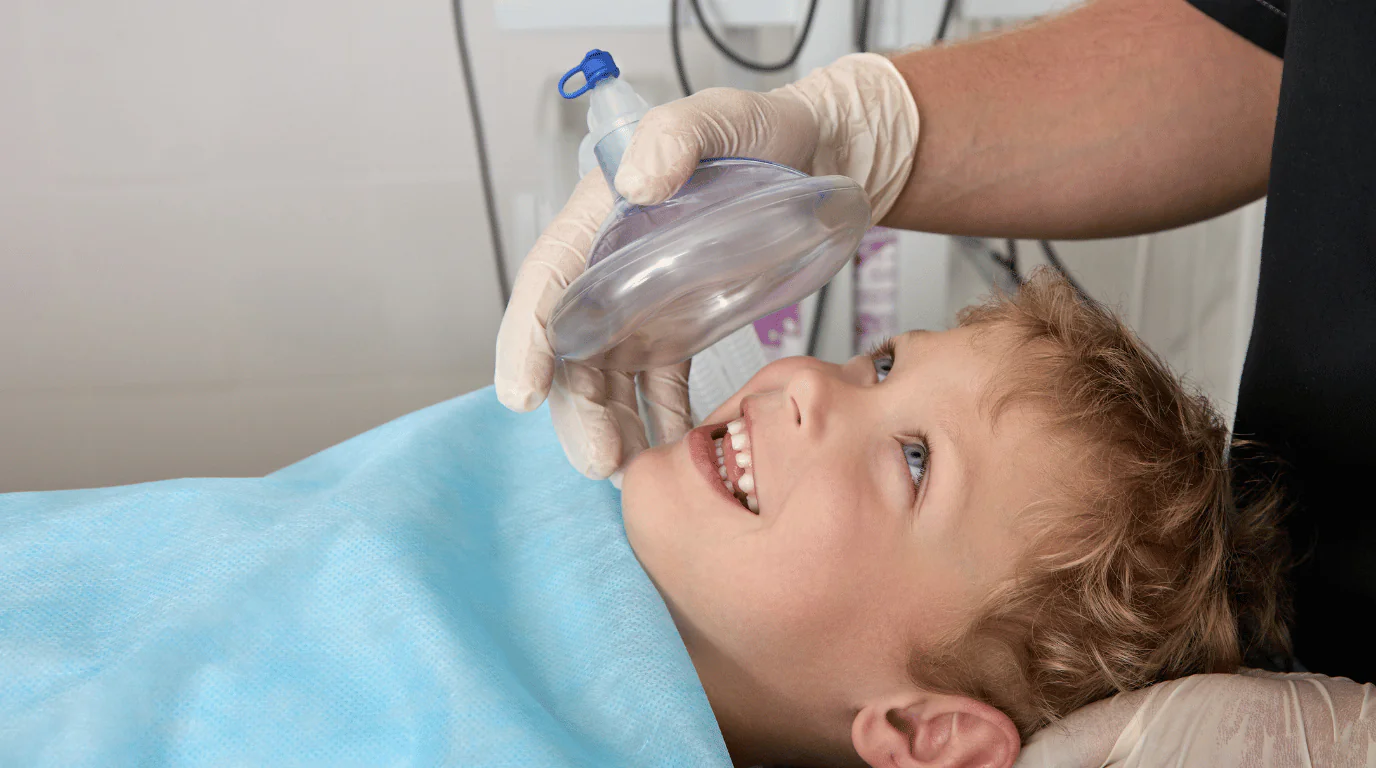
Your child may first be given an oral medication to feel more relaxed. In the operating room, the anesthesiologist gives anesthetic gas through a mask until your child is sound asleep. Your child then receives an IV for medication and fluids, and a breathing tube so they keep breathing while the dentist works in the mouth.
How is my child monitored?
National guidelines recommend separate providers for the dentistry and the anesthesia, and that’s how we work. Your child’s anesthesiologist has one job: watching over your child’s breathing, heart and comfort from start to finish. The pediatric dentist focuses only on the dental treatment.
Throughout treatment, your child’s vital signs are monitored without interruption, including:
- Heart rate and rhythm
- Blood pressure
- Breathing rate
- Oxygen level in the blood
- Carbon dioxide in each breath, which shows how well your child is breathing
These readings, along with every medicine given, are recorded on a timed anesthesia record.
Is general anesthesia safe for toddlers?
Young children’s airways are smaller and need extra care, which is why age is part of every child’s pre-surgery health review. Our anesthesia partners are specially trained in caring for the youngest patients, and they monitor your child’s breathing and oxygen levels continuously from start to finish during their procedure.
What does waking up look like?
After treatment, the breathing tube is removed and a nurse watches your child in a recovery room until their vital signs are stable. Children often wake up feeling “weird,” restless, or teary. These are common effects of coming out of anesthesia and do not mean your child is in pain.
Recovery the same evening
Your child will only be released from the surgery center after the anesthesiologist and nursing staff confirm they are stable and meet discharge criteria. Children may feel sleepy, fussy or wobbly for the rest of the day. Plan for a quiet day at home with an adult watching closely. We’ll give you written aftercare instructions and a number to call with questions. You can also review our after-surgery care instructions.